

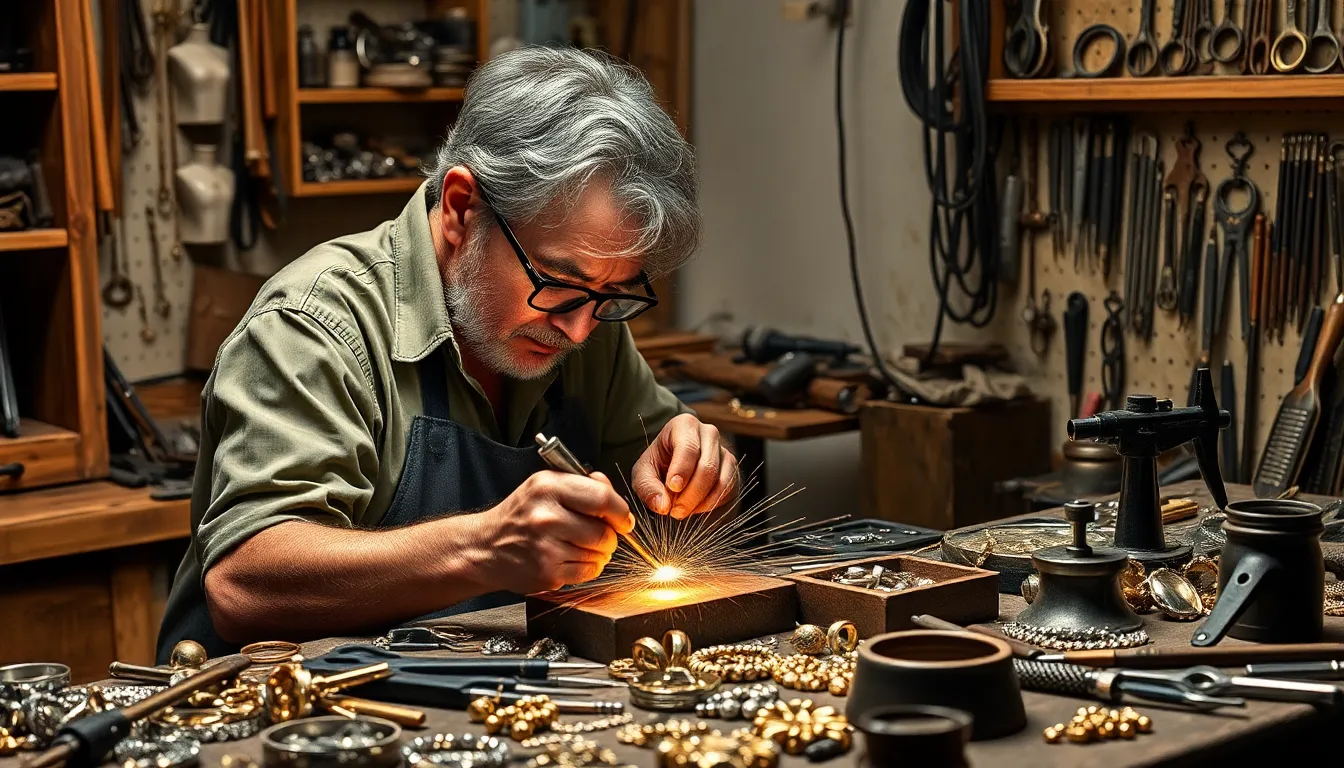

In a world where fast fashion reigns supreme, jewelry craftsmanship stands out like a rare gemstone in a sea of costume bling. It’s not just about shiny objects; it’s about the artistry that transforms raw materials into wearable masterpieces. Imagine a skilled artisan pouring their heart and soul into every delicate detail, ensuring each piece tells a unique story. Who wouldn’t want to wear a slice of that creativity?
Jewelry Craftsmanship
Jewelry craftsmanship embodies the fusion of creativity and technical skill. Artisans dedicate time to perfecting their techniques, ensuring each piece tells a unique story.
The Art of Design
Design represents the foundation of jewelry craftsmanship. Inspiration can come from nature, culture, or personal experiences. Every design reflects an artisan’s vision, merging aesthetics with functionality. Trends may influence styles but timeless designs often retain popularity. Illustrating elegance and innovation, bespoke jewelry pieces showcase an artist’s capabilities, ensuring that each item stands out in a crowded marketplace.
Techniques and Tools Used
Craftsmanship involves diverse techniques and specialized tools. Techniques like metalworking, stone setting, and engraving contribute to the final product’s quality. Tools such as pliers, soldering irons, and jewelers’ saws play crucial roles in the creation process. Mastering these techniques requires years of practice and dedication. Each tool aids artisans in maintaining precision while shaping materials into intricate designs, highlighting their commitment to excellence.
The History of Jewelry Craftsmanship
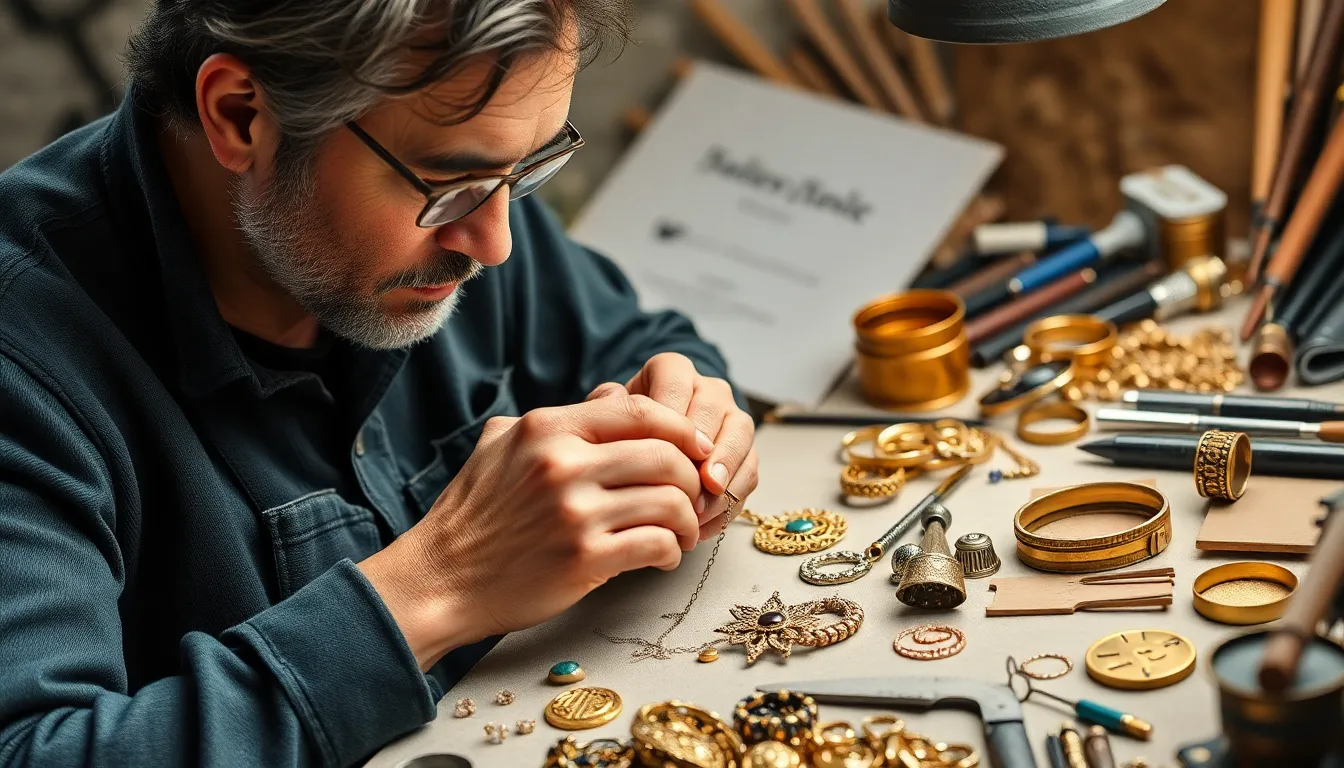
Jewelry craftsmanship has deep roots in human history. The artistry of creating wearable adornments reflects culture and societal values across centuries.
Ancient Civilizations
Ancient civilizations laid the groundwork for jewelry craftsmanship. Egypt, a notable example, showcased intricate gold jewelry adorned with precious stones. Mesopotamia also contributed significantly, utilizing lapis lazuli and carnelian in their designs. The skilled artisans of these eras exemplified craftsmanship by combining available materials with symbolic meaning. In addition to aesthetics, jewelry often held spiritual significance and indicated social status. These early practices established enduring traditions that continue to influence modern artisans.
Evolution Through the Ages
The evolution of jewelry craftsmanship reveals how techniques and styles transformed over time. During the Middle Ages, religious themes dominated design, with artisans focusing on intricate metalwork. The Renaissance sparked a revival of classical influences, emphasizing detailed engraving and gemstone settings. The Industrial Revolution introduced mass production but didn’t diminish the value of handmade pieces. Artisans adapted by blending traditional craftsmanship with modern techniques, ensuring uniqueness. Today, contemporary jewelry reflects both historical influences and innovation, merging age-old methods with new technologies for exquisite results.
Modern Jewelry Craftsmanship
Modern jewelry craftsmanship showcases the blend of traditional techniques and contemporary innovations. Artisans today focus on sustainability, creativity, and quality.
Sustainable Practices
Sustainable practices have gained traction in the jewelry industry. Crafting eco-friendly pieces involves using ethically sourced materials and recycled metals. Artisans often select conflict-free gemstones to ensure their impact aligns with environmental values. Techniques like 3D printing allow for minimal waste during production, promoting responsible consumption. Consumers increasingly prefer brands that prioritize sustainability, fostering a connection between artistry and environmental consciousness.
Innovation in Design
Innovation in design plays a crucial role in modern jewelry craftsmanship. Unique techniques emerge, such as integrating technology with artistry. Many designers explore unconventional materials, including bio-resins and lab-grown diamonds, to challenge traditional norms. Contemporary jewelry often features modular designs, enabling versatility in wear. Artisans push boundaries, blending styles and cultures to create pieces that resonate with diverse audiences. This creative exploration enriches the jewelry landscape, making each piece a statement of individuality.
Notable Jewelry Craftsmanship Techniques
Jewelry craftsmanship incorporates various notable techniques, each contributing to the uniqueness of a piece.
Metalworking stands as a foundational skill. Artisans shape, cut, and join metals like gold and silver, crafting intricate designs that form the backbone of many jewelry items.
Engraving adds a personal touch. Artisans carve detailed patterns or messages into surfaces, transforming simple pieces into cherished heirlooms.
Casting is a transformative process. This method involves pouring molten metal into molds, allowing artisans to create complex shapes that would be difficult to achieve through other techniques.
Stone setting requires precision. Artisans place gemstones securely within the metal framework, enhancing the overall beauty and ensuring longevity.
Enameling introduces color and texture. By fusing powdered glass to metal surfaces through heat, artisans create vibrant designs that offer a unique aesthetic.
Filigree showcases delicate artistry. This technique uses fine wires of metal coiled and twisted into intricate patterns, providing a lace-like effect that highlights the skill involved.
Hydroforming utilizes fluids to shape metal. Artisans push metal into forms using pressure, resulting in fluid, organic shapes that traditional methods might not achieve.
3D printing innovates the craft. Artisans utilize digital designs to produce complex structures, promoting efficiency while reducing waste, aligning craftsmanship with modern values.
Sustainable practices are gaining importance. Artisans increasingly prioritize ethically sourced materials and recycled metals, reflecting a commitment to environmental responsibility within the industry.
This array of techniques not only reflects the creativity of artisans but also showcases their dedication to quality and excellence in jewelry craftsmanship.
Conclusion
Jewelry craftsmanship stands as a testament to the dedication and creativity of artisans. Each piece tells a story rooted in tradition and innovation. By valuing the artistry behind jewelry, individuals embrace not just adornment but a connection to history and culture.
As the industry evolves, the commitment to sustainability and ethical practices ensures that future generations can appreciate the beauty of handcrafted pieces. The blend of traditional techniques with modern technology continues to push the boundaries of design, making every item a unique expression of individuality.
In a world often driven by fast fashion, the appreciation for true craftsmanship shines brightly, reminding us of the significance and artistry woven into every piece of jewelry.